New Roof Leaking? What Hoover Homeowners Should Do
New roof leaking? Learn why it happens and explore steps Hoover homeowners can take to address the issue quickly and effectively.
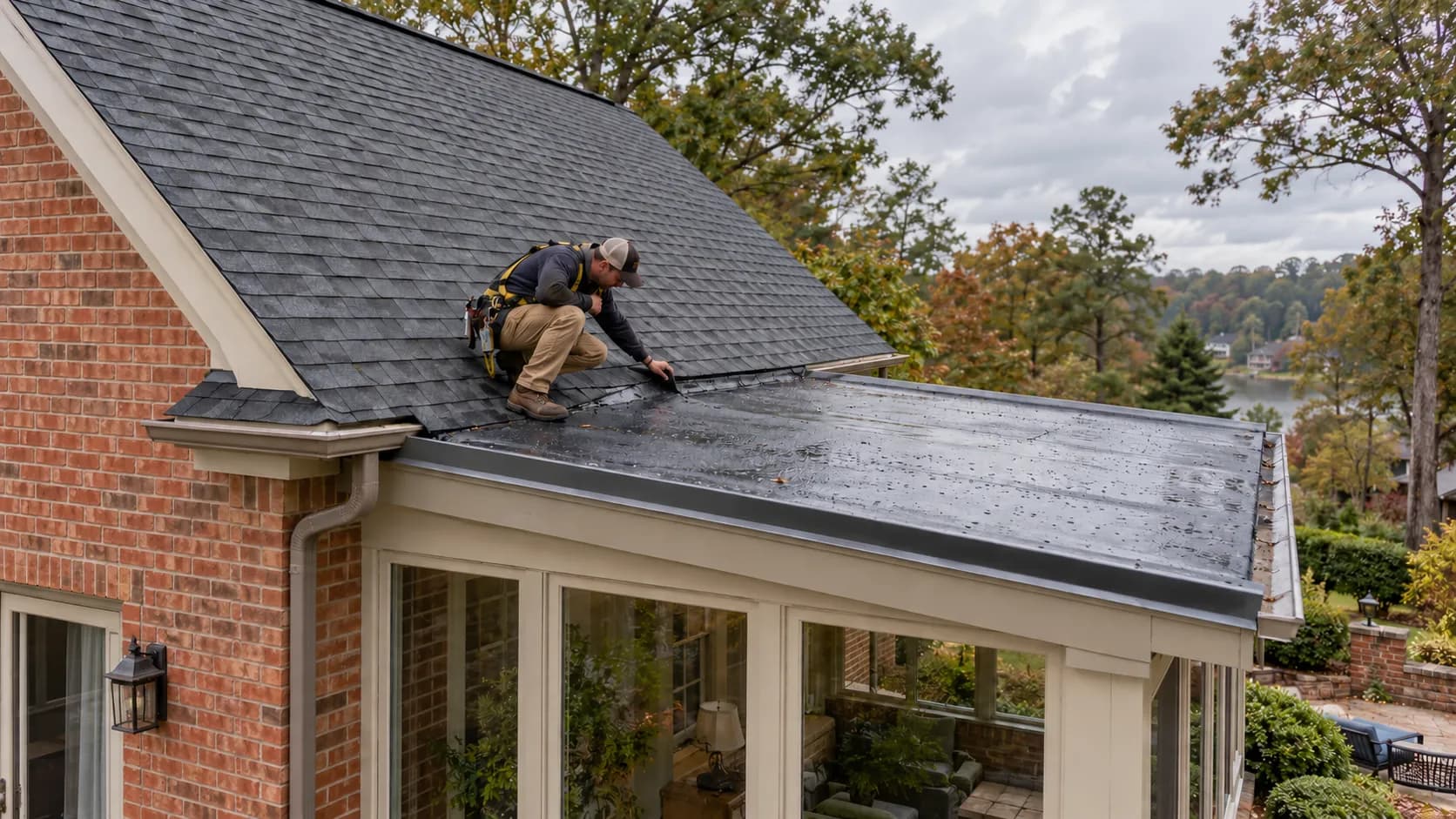
A Hoover-area homeowner recently called us with a frustrating problem: her roof had been replaced only a few years earlier, but water was already entering an enclosed sunroom. The leak appeared near the area where a steeper section of the main roof transitioned onto the sunroom’s lower-slope roof.
Her question was simple: How can a relatively new roof already be leaking—and what should I do next?
A roof that is only a few years old should not normally leak. However, even new roofing materials can fail to keep water out when the wrong material is used for the roof’s slope, a transition is detailed incorrectly, flashing is missing or poorly installed, or the installation relies too heavily on caulk or roof cement.
The right response is not to assume that the entire roof needs replacement. The first priority is to determine exactly how water is entering and what kind of repair will correct the underlying cause.
Why a Newer Roof May Leak
1. The Roofing Material May Not Be Appropriate for the Slope
Asphalt shingles are designed to shed water rather than function as a completely waterproof membrane. They work best when the roof has enough slope for rainwater to drain quickly.
Most asphalt shingles require a minimum roof slope of 2:12. Roof sections between 2:12 and 4:12 are considered low slope for shingle installation and generally require additional underlayment protection and strict adherence to the manufacturer’s installation instructions. Sections below the shingle manufacturer’s minimum slope usually need a roofing system designed specifically for low-slope applications, such as an appropriate membrane system.
Sunrooms, porches and home additions frequently have lower slopes than the main roof. If standard shingles are simply continued from the steep roof onto a section that is too flat, water can move beneath the shingles and eventually enter the home.
2. The Steep-to-Low-Slope Transition May Be Improperly Detailed
The place where a steep roof meets a lower roof is especially vulnerable because it must handle concentrated water moving from one roof surface to another. The transition needs the correct combination of underlayment, membrane and flashing for the specific roof design.
If those components do not overlap correctly—or if the transition was treated as though it were an ordinary shingle area—water may work its way beneath the roofing even though the shingles still look relatively new.
3. Flashing May Be Missing or Incorrectly Installed
Flashing directs water away from roof-to-wall intersections, chimneys, valleys, penetrations and changes in roof design. A small flashing error can create a persistent leak that is difficult to identify from the ground.
Caulk or roofing cement may temporarily slow a leak, but sealant alone should not be used as a substitute for properly designed and installed flashing. If the underlying detail is wrong, repeatedly adding sealant usually treats the symptom rather than the cause.
4. Underlayment, Fastening or Other Installation Details May Be Inadequate
A roof is a complete system, not just the shingles visible from outside. Incorrect underlayment, misplaced fasteners, exposed nails, poorly sealed penetrations and improper overlaps can all allow water intrusion. These problems may not become obvious until months or years after installation.
5. The Water May Be Entering Somewhere Else
Water does not always drip directly below the point where it enters the roof. It can travel along the roof deck, rafters or framing before appearing on a ceiling or wall. That is why simply applying sealant above the visible stain often fails to solve the problem.
What Should You Do First?
Document the Leak
Photograph interior stains, active dripping and any damaged finishes. Note when the leak occurs, the direction of the wind and whether it happens during every rain or only during heavy, wind-driven rain. Do not climb onto a wet or steep roof to gather evidence.
Review Your Contract and Workmanship Warranty
Locate the original proposal, warranty documents, invoices and any photographs from the installation. Roofing materials may have a manufacturer’s warranty, while the contractor may provide a separate workmanship warranty. These cover different things.
Contact the Original Roofing Contractor
If the company is still operating, give it an opportunity to inspect the problem and explain what it believes is causing the leak. A reputable contractor should take a leak on a recently installed roof seriously and clearly explain the recommended correction.
Consider an Independent Roof-Leak Assessment
If you are uncomfortable with the original contractor, receive an unclear explanation or want documentation before discussing the problem with the installer, an independent assessment can be valuable.
A proper roof-leak investigation should examine:
The pitch of each affected roof section
Whether the roofing material is approved for that slope
The steep-to-low-slope transition
Flashing at walls, valleys and penetrations
Exposed fasteners, sealants and previous repairs
Interior water patterns and the likely path of moisture
Whether the evidence points to storm damage, installation error or another cause
The homeowner should receive a clear explanation, photographs when practical and a recommended repair—not simply a sales pitch for a full roof replacement.
Should You File an Insurance Claim?
Do not assume that every roof leak is an insurance claim. Homeowners insurance commonly responds to damage caused by a covered event such as wind, hail or a fallen tree. A leak caused by improper installation or defective workmanship may be handled differently and is often not covered as damage to the roof itself. Coverage for resulting interior water damage can also depend on the policy and circumstances.
Before filing a claim, identify the most likely cause of the leak and review the situation with your insurance agent or carrier. An unnecessary claim may not solve a workmanship problem.
Does a Leak Mean You Need Another New Roof?
Not necessarily. If the problem is isolated to a sunroom, transition, flashing detail or penetration, a targeted repair may correct it without replacing the main roof. The repair must address the actual water-entry point and use materials compatible with the roof’s slope and existing system.
If the investigation reveals widespread installation problems, then a larger corrective project may be necessary. The diagnosis should come before the recommendation.
Get the Cause Before You Pay for the Cure
When a newer roof leaks, homeowners deserve more than a tube of sealant or an immediate recommendation for another replacement. They deserve to know why the roof is leaking, whether the original installation contributed to the problem and what repair will provide a lasting solution.
Frontier Roofing Co. provides roof-leak troubleshooting and honest assessments for homeowners throughout Birmingham, Hoover, Helena and surrounding communities. If your roof is leaking—whether it is three years old or thirty—we would be honored to help you understand the problem and determine the most practical next step.
Contact Frontier Roofing Co. to schedule a roof-leak assessment.