Roof Installed Without Drip Edge? Why It Matters and How It Can Be Fixed
See daylight between your fascia board and gutter? Your roof may be missing drip edge. Learn why it matters and how it can often be added without a new roof.
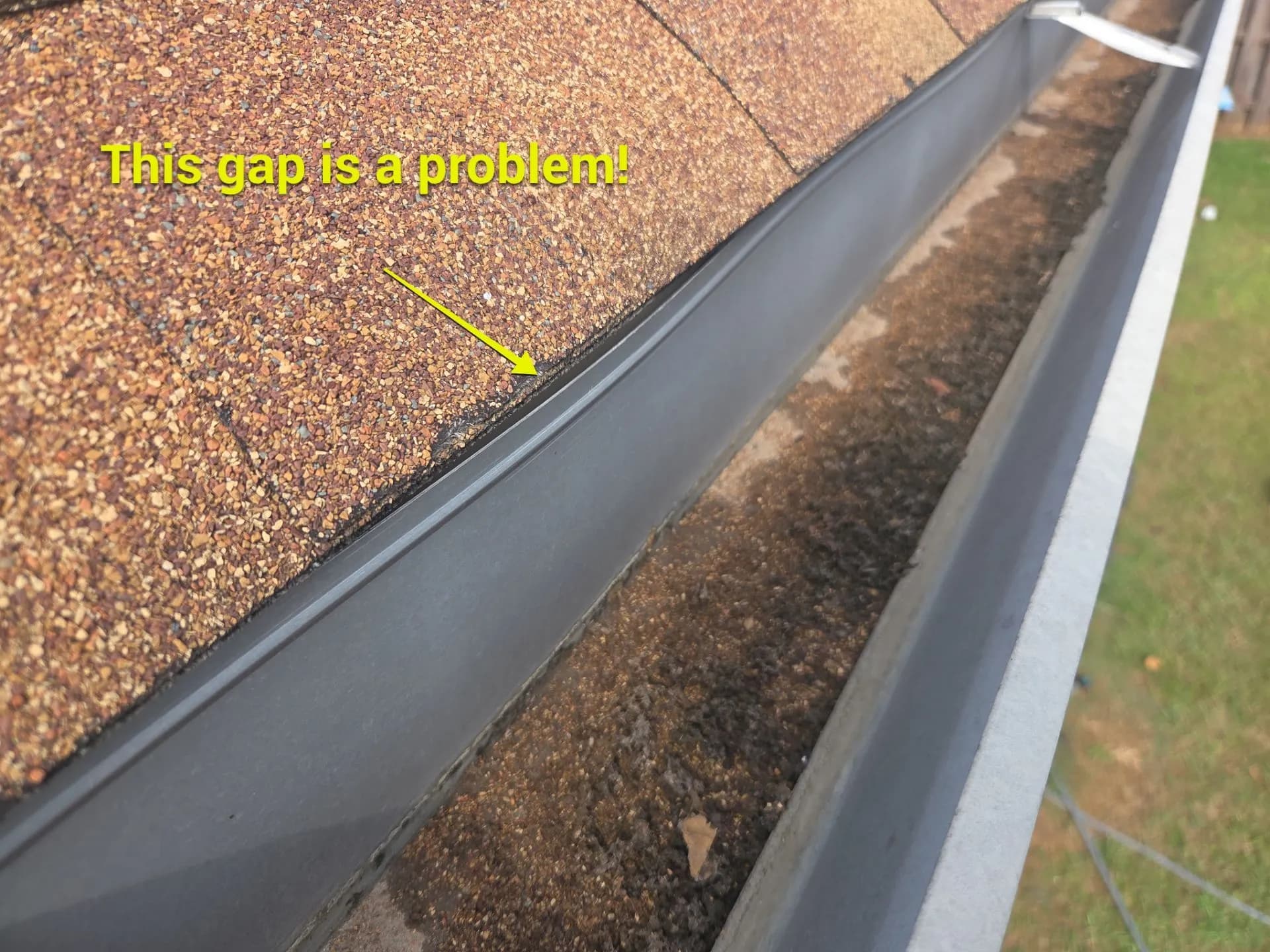
A Hoover-area homeowner recently called us about something he had been noticing for a while. His roof was replaced years ago, and when he stands under his gutter and looks up, he can see daylight between the fascia board and the gutter. The shingles were also installed without enough overhang past the roof edge, so they barely reach the gutter. Someone had suggested installing a piece of metal under the first row of shingles to send the water into the gutters.
His question was simple: Is there a piece of metal that is supposed to be at the edge of my roof, and can it be added without replacing the whole roof?
The answer is yes. That metal is called drip edge, and from what he described, his roof appears to have been installed without it. It is a small part of a roof, but leaving it out can cause big problems.
Just this week, we inspected a home where the same kind of problem meant that every time it rained, water poured down between the gutter and the fascia right in front of the back door. The homeowners could not step outside during a storm without getting soaked.
The good news is that a missing drip edge is often fixable. The first step is understanding what drip edge does and what happens when it is not there.
What Drip Edge Is and Why It Matters
1. What Drip Edge Does
Drip edge is a strip of bent metal installed along the edges of the roof. Along the eaves (the lower edges where the gutters hang), it extends past the fascia board and guides water into the gutter instead of letting it curl back under the roof edge or run down the fascia. Along the rakes (the sloped edges at the gables), it helps protect the edge of the roof deck and keep wind-driven rain out.
2. Is Drip Edge Required?
Building codes in many areas, including the International Residential Code, call for drip edge at both the eaves and rakes of asphalt shingle roofs. Local requirements vary, but on a typical shingle roof, drip edge is a standard part of the job, not an upgrade.
3. How Shingle Overhang Fits In
Shingles are meant to extend a little past the drip edge so water drops cleanly into the gutter. Shingle manufacturers generally specify a small overhang, commonly in the range of about 1/4 to 3/4 inch. Always check the manufacturer's installation instructions.
Shingles installed without enough overhang are a problem on their own. But with no drip edge to bridge the gap between the roof and the gutter, the problem gets much worse, because nothing carries the water past the fascia.
What Happens When a Roof Has No Drip Edge
1. Water Runs Behind the Gutter
Water tends to cling to surfaces and follow them. Without drip edge, rainwater can run down behind the gutter instead of into it. That is exactly what was happening at the back door we mentioned above.
2. Fascia, Soffit and Decking Stay Wet
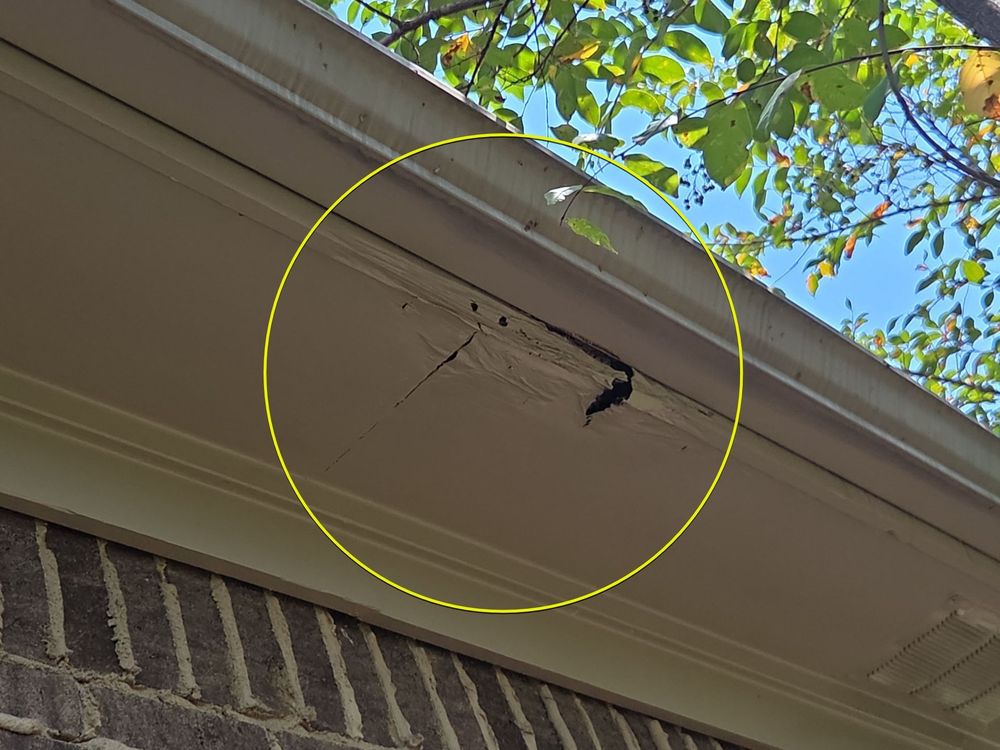
Water running behind the gutter soaks the fascia and can reach the soffit and the edge of the roof decking. Wood that stays wet will eventually rot.
3. Wet Doorways, Foundations and Landscaping
Water that misses the gutter falls in a sheet along the side of the house. It can splash at entrances, wash out mulch and soil, and send water toward the foundation.
4. Gutters Can Pull Loose
Gutter fasteners in wet or rotting fascia lose their grip over time, and a sagging gutter makes the gap between the fascia board and the gutter even bigger.
Signs Your Roof May Be Missing Drip Edge
Daylight visible between the fascia board and the gutter when you look up from below.
Water dripping or pouring behind the gutter during rain, rather than going into the gutter.
Water stains, streaks or peeling paint on the fascia or soffit.
Soft, cracked or rotted fascia boards
Gutters that sag, lean outward or have pulled away from the house
What Should You Do First?
1. Look From the Ground
Most of these signs can be spotted safely from the yard, or from a doorway during a rain. Do not climb onto the roof or lean out from a ladder at the roof edge to investigate.
2. Take Photos
Photograph any gaps, stains, peeling paint or sagging gutters. A short video of water running behind the gutter during rain is especially helpful.
3. Gather Your Roofing Paperwork
Find the proposal, invoice or warranty from your roof replacement. It may show whether drip edge was included.
Can Drip Edge Be Added Without a New Roof?
In many cases, yes. Drip edge or a gutter apron can often be retrofitted by carefully slipping it beneath the first course of shingles along the eaves. This also helps make up for shingles installed without enough overhang, because the metal carries the water out over the gutter. The gutters can then be adjusted to sit correctly under the roof edge, and gutters that have had water running behind them for years often need to be re-secured to the fascia.
That said, if the shingle overhang is far too small, or if the fascia or decking has already rotted, more work may be needed, such as replacing damaged wood or reworking the first courses of shingles. The diagnosis should come before the recommendation.
What a Proper Roof and Gutter Inspection Should Examine
Whether drip edge is present at the eaves and rakes, and its condition if it is
How far the shingles overhang past the roof edge
Gutter position and how securely it is attached to the fascia
The condition of the fascia and soffit
The roof decking at the edge
Gutter slope and drainage, including downspouts
Any rot, water staining or previous repairs
You should receive a clear explanation, photographs when practical and a recommended repair, not a sales pitch for a full replacement.
Is This an Insurance Claim?
Usually not. Homeowners insurance commonly responds to damage from a covered event such as wind, hail or a fallen tree. A roof installed without drip edge, or with shingles that do not overhang enough, is generally an installation or workmanship issue, not storm damage. Coverage for any resulting damage depends on your policy and circumstances, so review the situation with your insurance agent or carrier before assuming a claim is the answer.
Frequently Asked Questions
What is drip edge on a roof?
Drip edge is a metal strip installed along the eaves and rakes of a roof. It directs water away from the fascia and into the gutters, and it helps protect the edge of the roof deck.
How can I tell if my roof has drip edge?
From the ground, look along the bottom edge of the roof just above the gutter. Drip edge usually shows as a thin metal strip between the shingles and the fascia. If you see daylight between the fascia board and the gutter, or water runs behind the gutter in the rain, have the fascia board and gutter checked.
Can drip edge be added to an existing roof?
Often, yes. It can frequently be slipped under the first course of shingles without replacing the roof, depending on the shingle overhang and the condition of the fascia and decking.
Get the Cause Before You Pay for the Cure
Seeing daylight between your fascia board and your gutter does not automatically mean you need a new roof. It does mean water probably is not going where it should, and a missing drip edge is a likely suspect. The sooner the cause is identified, the less likely you are to be dealing with rotted fascia or a soaked doorway later.
Frontier Roofing Co. provides roof and gutter inspections and honest assessments for homeowners throughout Hoover, Birmingham, Helena and surrounding communities. We will look at what is happening at your fascia board and gutters, explain it in plain language and recommend the most practical fix.
Contact Frontier Roofing Co. at frontierroofingco.com/contact-us or call (205) 496-8418 to schedule a roof and gutter inspection.