Is It a Roof Leak or Your Chimney Flashing?
Ceiling stain near a chimney on a 10-15 year old roof? Learn why flashing and pipe boots fail first, and how a roof and chimney inspection finds the cause.
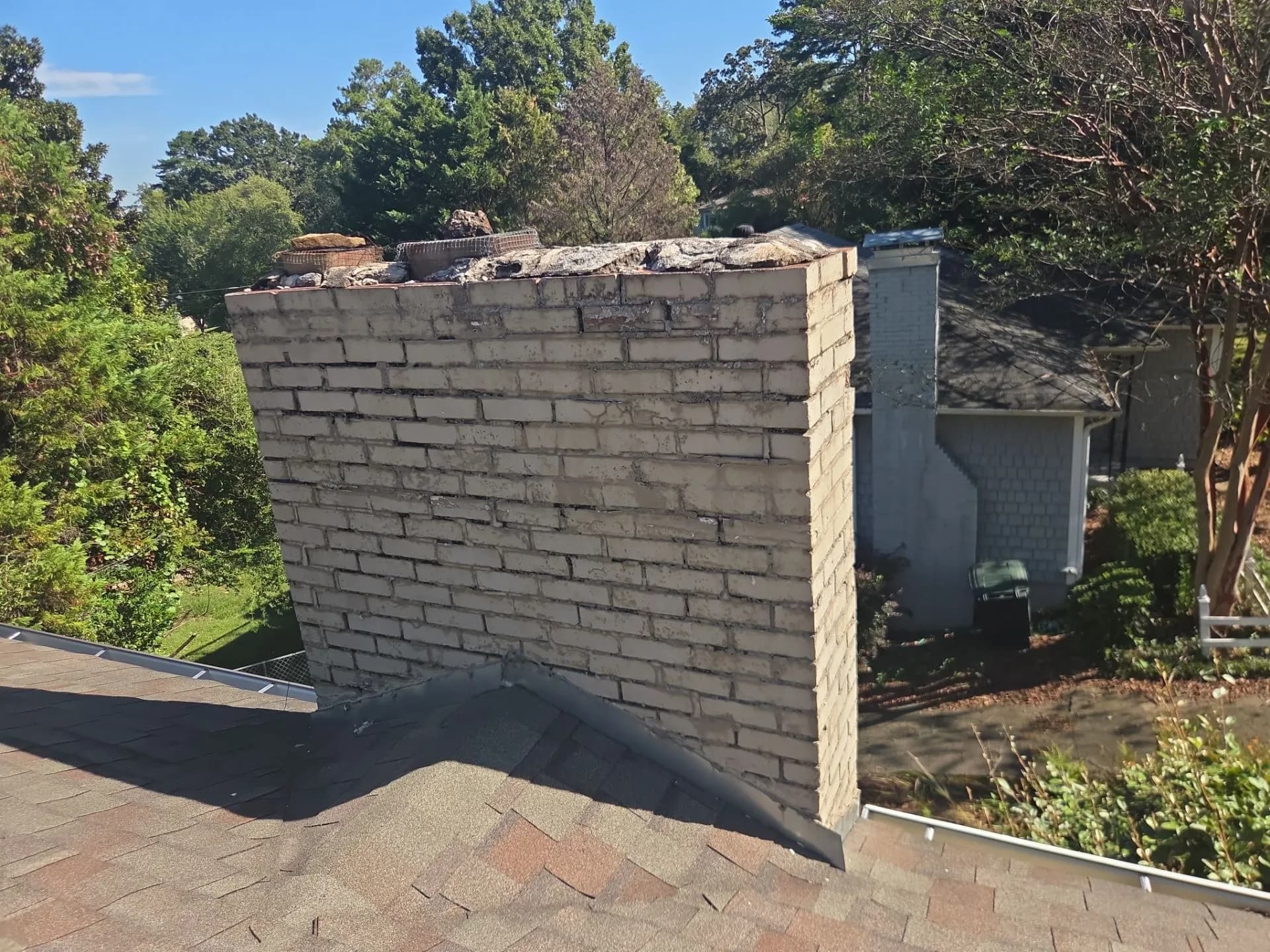
A Hoover-area homeowner recently called us about water damage on an upper bedroom ceiling in his two-story house. The house is about 10 to 11 years old. He had already been in the attic and believed the problem was near the chimney, possibly the flashing on one side. After heavy rain, the ceiling was still damp, so he could not patch inside until the water source was stopped.
His question was simple: Is this a roof leak, or is my chimney flashing letting water in?
That is a common question on roofs that are roughly 10 to 15 years old. The shingles often still have useful life left. What fails first is frequently the roof accessories: chimney flashing, pipe boots, and other penetrations. A ceiling stain can look like "the roof is failing" when the real entry point is a small flashing detail next to the chimney.
The right next step is not to assume you need a full roof replacement. It is to find where the water is getting in, then fix that cause so the interior can dry and be repaired.
Why 10 to 15 Year Old Roofs Start Leaking at Flashing
1. Shingles and Accessories Age Differently
Asphalt shingles on a typical home are often still in good shape around the 10-year mark, depending on the product, pitch, and exposure. Roof accessories do not always last as long. Rubber pipe boots dry out and crack. Chimney flashing can loosen, pull away, or get sealed with caulk that eventually fails. When those details stop shedding water properly, a leak can appear even though most of the field shingles are still sound.
2. Chimney Flashing Is a High-Risk Detail
A chimney cuts through the roof, so water has to be diverted around the chimney with chimney flashing, counterflashing, and often a cricket on the uphill side. If any of those pieces are missing, short, loose, or relying too much on sealant, water can work in during rain or wind-driven storms.
Homeowners often call this a "roof leak" because the ceiling stain is under the roof. In many cases water is entering at the chimney flashing, chimney cap, porous brick, or nearby siding, not the field shingles.
3. Pipe Boots Fail Quietly
Plumbing vents are sealed with boots under the shingles and around the pipe. Over time those boots can crack, shrink, or pull away. The leak may only show up after heavy rain, and the drip inside may not land directly under the pipe.
4. Water Travels Before It Shows Up
Water that enters at flashing can run along the roof deck, a rafter, or framing before it stains a ceiling. A damp spot upstairs can point toward the chimney in the attic even when the drywall stain looks like roof failure.
What Happens If Chimney Flashing Problems Go Unfixed
1. The Ceiling Keeps Getting Wet
As long as water can get in at the flashing, interior finishes stay damp after rain. Patching drywall or paint before the source is stopped usually means the stain returns.
2. Attic and Framing Stay Moist
Repeated wetting can affect insulation, sheathing, and wood near the chimney.
3. Sealant-Only Fixes Do Not Last
Caulk over flashing can temporarily slow water, but it is not a substitute for correctly installed flashing. When caulk fails, the leak comes back.

4. A Premature Roof Replacement Gets Proposed
Without a clear diagnosis of the flashing or boots, you may be told you need a new roof when a repairable accessory was the problem. Diagnosis should come before the recommendation.
Signs to Look For
A ceiling stain or damp drywall near an exterior wall that lines up with a chimney
Water marks or damp insulation in the attic near the chimney chase
Visible gaps, lifted metal, or dried, cracked caulk where flashing meets the chimney
Rusted, cracked, or pulled-away pipe boots around plumbing vents
Leaks that show up or worsen after heavy or wind-driven rain
A roughly 10 to 15 year old roof with stains before the shingles look worn out
What Should You Do First?
1. Look From the Ground (and Safely From Inside)
Note where the ceiling stain is relative to the outside walls and chimney. From the yard, look at the chimney flashing and nearby vents if you can see them safely. Please do not climb onto your roof to inspect, as that is very dangerous. Leave that up to the professionals who are experienced and equipped with proper safety equipment.
2. Take Photos
Photograph the interior stain, any safe attic views from the attic opening, and exterior shots of the chimney and flashing from the ground. Note when the leak shows up and whether it follows heavy rain.
3. Gather Your Roofing Paperwork
Find any proposal, invoice, or warranty from a prior roof or repair. It may help show the roof's age; the inspection still needs to find the water path.
Can Chimney Flashing Be Fixed Without a New Roof?
Often, yes. If the field shingles are still sound and the leak traces to chimney flashing, a pipe boot, or a similar detail, a targeted repair can stop the water without replacing the whole roof. The repair has to address the actual entry point: reworking flashing, correcting a cricket if needed, replacing failed pipe boots if close by and leaking, or addressing chimney cap, chimney brick or masonry, or chimney siding issues when those are the source.
If the inspection finds widespread wear, storm damage, or many failed accessories, a larger project may make more sense. Diagnosis should come before the recommendation. Until the water is stopped and the area has dried, wait on interior ceiling repairs.
What a Proper Roof Inspection Should Examine
Chimney flashing (chimney flashing, counterflashing, and cricket or saddle where applicable)
Condition of the chimney cap, crown, brick or masonry, and chimney siding near the roof line
Pipe boots and other roof penetrations
Shingle condition in the field and around valleys and walls
Attic side of the leak path when access is available
Any prior sealant repairs or patches that may be masking a deeper problem
You should receive a clear explanation, photographs when practical, and a recommended repair, not a sales pitch for a full replacement.
Is This an Insurance Claim?
Not automatically. Homeowners insurance commonly responds to damage from a covered event such as wind, hail, or a fallen tree. Leaks from age-related flashing, failed pipe boots, or worn sealant are often maintenance or wear issues, not storm damage. Coverage for interior damage depends on your policy and the facts. Identify the likely cause first, then review the situation with your insurance agent or carrier before assuming a claim is the answer.
Frequently Asked Questions
Can chimney flashing cause a ceiling leak even if my shingles look fine?
Yes. Flashing around a chimney is a separate detail from the field shingles. If it is loose, incomplete, or sealed only with failed caulk, water can enter while the rest of the roof still looks fine.
Why do roofs around 10 to 15 years old start leaking at flashings and pipe boots?
Those accessories take more weather stress at penetrations and often wear out sooner than the shingle field. Rubber boots crack; metal flashing can loosen or rely on sealant that fails.
Should I patch my ceiling before the roof is fixed?
Usually no. If the area is still damp after rain, the water source is still active. Stop the leak, let things dry, then repair the interior.
Get the Cause Before You Pay for the Cure
A damp upstairs ceiling near a chimney does not automatically mean your whole roof has failed. On many 10 to 15 year old homes, the shingles still have life left while chimney flashing or pipe boots have started to let water in. Finding that entry point first protects you from a temporary caulk job or an unnecessary full replacement.
Frontier Roofing Co. provides roof and chimney inspections and honest assessments for homeowners throughout Hoover, Birmingham, Helena and surrounding communities. We will look at the chimney, flashing and penetrations, explain what we find in plain language, and recommend the most practical fix.
Contact Frontier Roofing Co. at frontierroofingco.com/contact-us or call (205) 496-8418 to schedule a roof and chimney inspection.